Choosing Between an Adults-Only Resort and a Private Rental
An adults-only resort sells you a policy; a private rental sells you the whole building. Compare how the child-free promise is set, enforced, and verified in each.
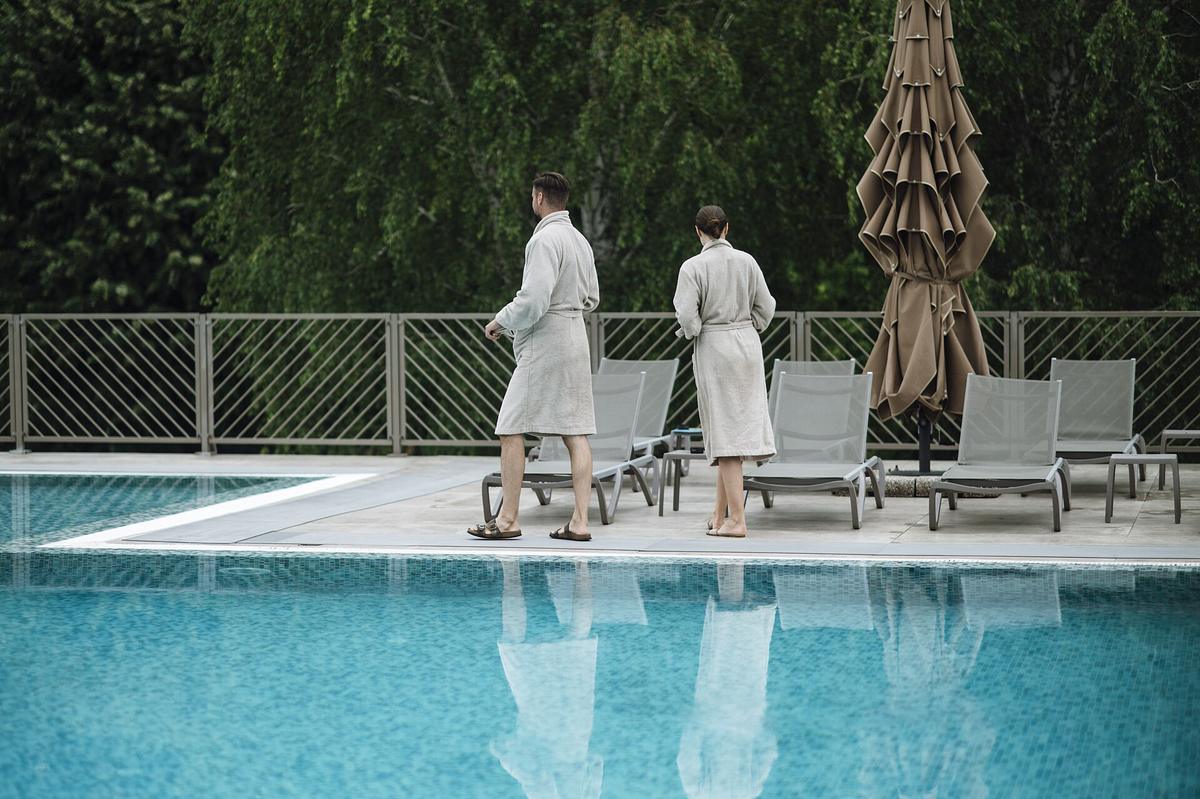

Choosing Between an Adults-Only Resort and a Private Rental
Most travellers assume an adults-only label guarantees a child-free stay. It does not. In Spain and Greece, the most common lower age limit is 16, not 18. In the Maldives, several major chains set the floor at 12. And in every country listed below, the term is a marketing choice, not a government classification. No tourism board enforces it. The resort sells a policy it can adjust. A private rental sells the whole building, but the host has zero enforcement mechanism if a neighbour complains. The question is not which option sounds better. It is which one gives you a reliably quiet stay for the price you pay.
An adults-only resort delivers certainty when its policy is hard-coded into the reservation system and the physical layout. In Mexico, where the lower age limit is 18 across virtually all all-inclusive adults-only stock, and in Jamaica, where Sandals and Couples Resorts enforce 18 year-round, you can book with confidence. In Spain, the picture is murkier. A hotel calling itself adults-only may admit 16-year-olds. That detail lives in the small print, not the headline. During the UK October half-term, some coastal resorts on the Costa del Sol and Mallorca relax their policy entirely for that week. The failure case is arriving in August to find a place that has reverted to family-friendly, a clause buried in the reservation terms for several Balearic hotels.
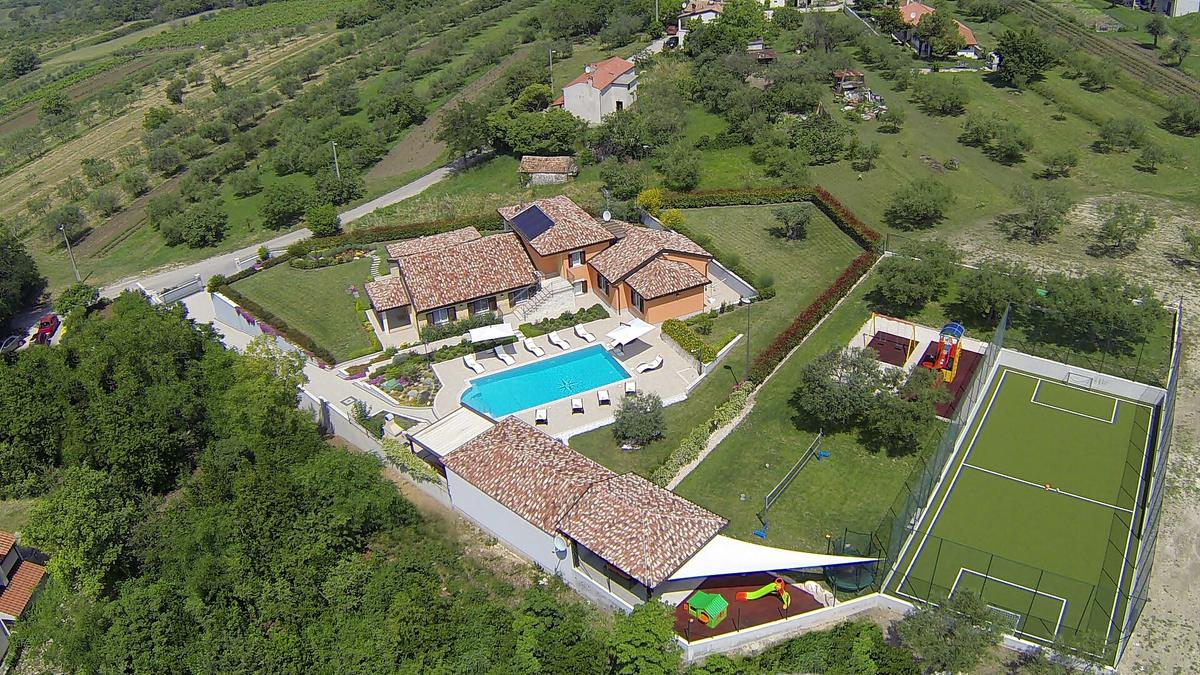
A private rental avoids the policy loophole because you control the guest list. If you book a villa for four adults, no child walks through the door unless you invite one. The risk shifts to your neighbours. Many adults-only rural fincas in Andalusia and agriturismos in Tuscany sit on unmade tracks with unfenced infinity pools. The host sets an age restriction as a safety liability waiver, not as an amenity. If the next villa books in with a family, you share the driveway, the pool and the view. The resort's walls keep you separated. The rental's plot lines do not.
What the Adults-Only Label Actually Covers
In resort zones across the Caribbean and Mediterranean, the adults-only designation often applies to a room block or a single pool, not the whole premises. A hotel may market an adults-only section within a family resort. The shared beach, the promenade and the main restaurant still host children. The child-free bubble pops the moment you leave the pool gate.
The phrase "adults-only" has no legal meaning anywhere in the research. Spain's regional tourism boards register the category, but the lower age limit is set by the establishment. Greece's Hellenic Chamber of Hotels does not include it in its classification system. Mexico, the Maldives, Italy, France, Turkey, Croatia and the United Kingdom all treat it as a self-declared operator policy. The one exception is the United Kingdom's Equality Act 2010, which permits age-restricted hotels under a specific exemption, but even there no government body audits compliance.
Lower Age Limits By Market
The number that matters is not the resort's slogan but the age floor in the reservation terms. Across Spain's mainstream adults-only hotels, 16 is the most common. Only the boutique and luxury segment sets it at 18. In Greece, the same split applies: 16 for mainstream resorts, 18 for high-end and small hotels. Mexico enforces 18 across its dominant all-inclusive adults-only stock, making the Riviera Maya and Cancun Hotel Zone reliable destinations for a guaranteed child-free stay.
The Maldives is the trickiest market. Several major chains set the floor at 12, while others use 16. The couples-only sub-category standardises at 18. If you book a resort in the Maldives without checking the fine print, you can share the overwater villa row with a 12-year-old next door. Naturist resorts in France and Spain enforce 18 almost universally, which gives them the strongest policy of any category.
When the Resort Wavers: Seasonal Policy Changes
An adults-only resort that holds the line year-round is rare. In the Canary Islands, where year-round sun and winter-sun demand from Northern Europe reduce family-revenue dependency, most establishments maintain their policy across all seasons. The Balearic Islands and mainland coastal Spain operate seasonally, April to October, with some hotels relaxing the rule outside that window or during school holidays.
Greece's island boutique hotels run seasonal from May to October, but a small number of Crete and Athens city hotels stay adults-only year-round. The Caribbean, Mexico, the Maldives and Turkey's Bodrum luxury boutique segment are year-round. For Turkey's Antalya all-inclusives, the season is April to October, mirroring the European summer peak.
The failure case arrives during school holidays. Spain's peak school holiday runs late June to early September, with additional breaks at Semana Santa and Christmas. The UK school holidays, which drive demand to the Costa del Sol and Mallorca, include late July to early September, two weeks at Christmas, one week in February, two weeks in April and one week in late May. If your dates overlap with the UK October half-term week, skip any Spanish coastal hotel that does not explicitly guarantee adults-only status in writing for those seven days.
How To Verify The Policy Before You Pay
Email the hotel directly. Ask two questions: what is the minimum check-in age, and do you ever relax the adults-only policy during school holidays or low season. A front desk manager will give you a straight answer if you ask for it in writing. A reservation agent will read you the marketing copy. For private rentals, check the house rules section of the listing. If the host has not stated a lower age limit, message them and ask whether they accept reservations with children or teens. The answer tells you nothing about your neighbours, but it tells you everything about the host's enforcement stance.
| Property Type And Market | Price Premium Or Advantage |
|---|---|
| 4-star all-inclusive, Mexico, Riviera Maya | 20–40% more than family equivalent |
| 5-star all-inclusive, Dominican Republic, Punta Cana | 25–50% more |
| Boutique hotel, Greece, Santorini | 15–30% more |
| Resort hotel, Maldives | 30–60% more, driven by overwater villa stock |
| Aparthotel, Spain, Canary Islands | 10–20% more |
| Private rental, party of 2, high season coastal | Advantage negligible to negative |
| Private rental, party of 4, Mediterranean Europe peak | 25–40% less per person per night |
| Private rental, party of 6+, any market | 40–55% less per person per night |
Private Rental: the Whole Building, but No Bouncer
A private rental gives you total control over who stays in your unit. If you book a villa in rural Tuscany for six adults, no child enters the premises unless you invite one. That is the advantage. The disadvantage is that the host has no enforcement mechanism for the surrounding properties. The adults-only restriction lives in the house rules of a single listing, not in the resort's registration system. If the neighbouring villa rents to a family with three children under ten, the noise and the pool splashing travel across the boundary line.
The cost advantage of a private rental only materialises at certain group sizes. For two adults in high-season coastal markets, the nightly rate is roughly the same as a resort or slightly higher. At four adults, the rental runs 25 to 40 percent less per person per night across Mediterranean Europe in peak season. At six or more adults, the saving jumps to 40 to 55 percent per person per night. The break-even trip length matters too. For two adults, a resort wins on setup costs and minimum-stay rules for any trip shorter than five nights. For four or more adults, the rental amortises fixed costs faster and breaks even at three to four nights.
The research shows that adults-only private rentals exist in every market, but the adults-only condition is guest-imposed, not a property licence. That means you can enforce it for your group, but you cannot enforce it for the estate. If you need guaranteed quiet, choose a remote villa with no visible neighbours. If you need guaranteed isolation, choose a resort that owns the entire site and enforces the policy at check-in.

Resort Zones Where the Policy Holds
Some destinations concentrate adults-only stock so densely that the policy becomes the market norm rather than an exception. In the Riviera Maya, the Cancun Hotel Zone and Puerto Vallarta's Zona Romantica, purpose-built all-inclusive corridors cater to a high volume of North American adult couples. The domestic family market is weak, so resorts have no financial incentive to relax the age restriction. The same logic applies in the Maldives, where the one-island-one-resort model makes adults-only a simple policy choice for establishments that target the honeymoon market. Punta Cana in the Dominican Republic and the Belek and Side corridors in Antalya, Turkey, follow the same pattern.
In Europe, the concentration is thinner. Spain's Canary Islands have the densest stock: Lanzarote, Fuerteventura and Gran Canaria south. The Balearics concentrate in Ibiza and north-east Mallorca. The Costa del Sol runs from Marbella to Estepona. Greece clusters on Santorini, Mykonos, Crete's Elounda and Chania adult-boutique clusters, and Rhodes at Ixia and Lindos. Italy, France, Croatia, Cyprus, Malta and the United Kingdom all have thin stock, dominated by independent boutique conversions rather than purpose-built resorts.
If you book in a market with thin stock, verify the policy more aggressively. The host or hotel manager has less reputational risk in a market where adults-only is a niche offering compared to Mexico, where a breach costs a major chain millions in repeat reservations.
What Goes Wrong and How to Fix it
The most common mistake is assuming "adults-only" means 18-plus across Spain. The most common floor is 16. In boutique urban hotels in Barcelona's Eixample, it can drop to 14. That catches couples expecting a child-free atmosphere and arriving to find teenagers in the lobby. Check the small print before you book. If the lower age limit is not stated on the reservation page, call the establishment.
A second failure case is the August trap. Even some Spanish adults-only resorts feel the pressure of national holiday traffic and prices peak. In the Balearics, specific hotels revert to family-friendly during July and August. The detail is in the reservation terms, not the marketing. If you book a Balearic hotel for August without reading the terms, you may arrive to find the policy suspended.
For private rentals, the failure is the neighbour. No enforcement mechanism exists for the surrounding units. The solution is to book a property that has no adjacent rental units: a stand-alone villa on a large plot, or a rural finca with no visible neighbouring buildings. Ask the host how many rental properties are on the same access road and whether any of them allow children.
A third failure is the unmade track. Many adults-only rural hotels in Andalusia and Catalonia sit on roads that standard hire-car insurance excludes. You need a specific waiver. If you arrive after dark without it and the road damages your rental, the insurance claim fails. Budget for a 4x4 with full cover or arrange a pre-booked transfer from Málaga airport. The ride takes 35 to 45 minutes to the Marbella adults-only zone, with fares in the 60 to 75 euro band.
Be Honest About What You Are Buying
An adults-only resort sells a policy. A private rental sells a building. Neither is perfect. The resort delivers certainty when its policy is hard-coded, year-round, and backed by a major operator with reputational risk. The rental delivers total control over your own guest list but zero control over your neighbours. The best choice depends on your group size, your budget and your tolerance for uncertainty.
If you are a couple on a five-night honeymoon in the Caribbean, the resort wins on setup cost, policy enforcement and peace of mind. If you are a group of six friends splitting a villa in rural Tuscany for a week, the rental wins on cost per person and the ability to curate your own company. The one thing that most often goes wrong is failing to verify the policy in writing before you pay. A marketing claim is not a guarantee. A reservation confirmation is not a contract unless it states the lower age limit and confirms the policy applies on your specific dates. Get that in writing. If the hotel or host refuses to put it in an email, book somewhere else.
Common Questions
What is the most common minimum age for adults-only hotels in Spain?
16 is the most common lower age limit across mainstream adults-only hotels in Spain. Only the boutique and luxury segment sets the floor at 18. Always check the small print before booking.
Can an adults-only resort relax its policy during school holidays?
Yes. Some Balearic and Spanish coastal resorts revert to family-friendly during July, August and the UK October half-term. The detail is in the reservation terms. Email the hotel directly to confirm your dates are covered.
Is a private rental cheaper than an adults-only resort?
For two adults in high season coastal markets, the cost is similar. For four adults, a rental saves 25 to 40 percent per person per night. For six or more, savings reach 40 to 55 percent.
What is the main risk of booking a private rental for a child-free stay?
You control your own guest list, but zero control over neighbours. If an adjacent villa rents to a family, you share the pool area and the noise. Choose a stand-alone property with no visible neighbouring units.
Read next
-
 Turkey's Adults-Only Resort Labels and What They Actually Guarantee
Turkey's adults-only resort labels carry no legal weight. Learn how to read the real policy behind the marketing copy before booking in Bodrum or Antalya.
Turkey's Adults-Only Resort Labels and What They Actually Guarantee
Turkey's adults-only resort labels carry no legal weight. Learn how to read the real policy behind the marketing copy before booking in Bodrum or Antalya.
-
 What Adults-Only Actually Means Four Labels That Are Not the Same Thing
Adults-only is not one thing. It means a minimum age, a party rule, a clothing rule, or a marketing promise of quiet. Here is how to tell which one applies before you book.
What Adults-Only Actually Means Four Labels That Are Not the Same Thing
Adults-only is not one thing. It means a minimum age, a party rule, a clothing rule, or a marketing promise of quiet. Here is how to tell which one applies before you book.
-
 Travelling Without Your Children: What Adults-Only Means for Parents
Adults-only is for parents who want a quiet break without any children on site, including their own. Here is how the policy works and why it delivers exactly that.
Travelling Without Your Children: What Adults-Only Means for Parents
Adults-only is for parents who want a quiet break without any children on site, including their own. Here is how the policy works and why it delivers exactly that.
- Why a Quiet Hotel Is Not the Same as an Adults-Only Hotel A quiet hotel promises atmosphere, not a child-free stay. The difference between marketing and policy is one of the most common booking mistakes. Here is how to tell them apart.