Quiet Is Not Adults-Only and Here Is Why It Matters
A quiet hotel promises atmosphere, not a child-free stay. The difference between marketing and policy is one of the most common booking mistakes. Here is how to tell them apart.
A Quiet Hotel Promises Nothing About Children
A hotel that calls itself quiet, serene, tranquilo or no entertainment has made no promise about children. It has described an atmosphere, not a policy. This is the single most common booking mistake in Spain, the Canary Islands and every Mediterranean market where English-language listings use adjectives instead of rules.
In Spain, tranquilo on a rural hotel or campsite is a vibe. It is not a binding age restriction. The same is true for serene in Portugal, paisible in France and rustig in the Netherlands. None of these words carry legal force. They tell you the operator intends to keep the noise down through design, layout and the absence of an animation team. They do not tell you whether a 10-year-old will be at the next sunbed. The distinction matters because paying a premium for an adults-only label and arriving at a quiet hotel where teenagers are admitted is a failure you could have avoided.
How Marketing Replaces Policy Across Europe
Spain has no national tourism board classification for adults-only accommodation. The regional star-rating system does not encode age restrictions. A hotel can legally call itself adults-only on Booking.com, Expedia and its own website, then admit 14-year-olds in its small print. The most common minimum age across Spanish hotels is 16, not 18. In boutique urban hotels in Barcelona and Madrid, the minimum drops to 14. That catches couples expecting a genuinely child-free atmosphere.
The same gap exists in Greece, Portugal, Italy and Mexico. None of those countries have a government-enforced adults-only category. Turkey has recognised Adult Hotel as a sub-classification since 2019 through the Ministry of Tourism, but verification still requires reading the booking conditions line by line. The Maldives operates entirely on self-declaration. If the policy is not in the operator's published terms, you have no recourse. The refund will not be owed.
What the Adults-Only Label Actually Binds
The adults-only label binds the hotel only to its own terms. Those terms are in the booking conditions, not the listing headline. Check three things before you pay: the minimum age, whether the policy is year-round, and what the hotel shares with family resorts.
Minimum Age By Category
In large all-inclusive resorts in Spain, the norm is 16 or 18. Campsites and holiday parks vary by operator. Dutch-market parks set their adults-only zones at 18. German-market parks sometimes permit 16. French-market quiet zones drop to 12. Apartment and villa rentals rarely state an age restriction at all. When they do, it is the owner's preference written in the listing text, not a binding category. Naturist resorts in Europe enforce 18 site-wide. Some allow 16 with a guardian.
Seasonal Reversion
Many Mediterranean resorts that market as adults-only revert to family-friendly during July and August. The adults-only status runs September to June. In the Balearics, this detail is buried in the booking terms. August should trigger a phone call. Confirm the policy is in effect. UK October half-term is another window where some Costa del Sol and Mallorca hotels relax their rules. The hotel will not volunteer this information.
Adjacent Family Zones
Adults-only resorts in Spain sit physically adjacent to family hotels. Beach access and promenades are shared. The child-free bubble pops the moment you leave the pool gate. In Marbella, Costa Adeje and Illetas, the adults-only label applies to the grounds, not the shoreline.
Rural Safety Liability
Rural adults-only fincas in Andalusia and the Balearics often have unfenced infinity pools and steep drops. The age restriction functions partly as a safety liability waiver. The operator is not set up for children, but that is not the same as excluding them by policy. A finca with 12 rooms and no entertainment team will be quiet by design regardless of who books in.
How to Verify the Policy Before You Pay
Open the hotel's booking conditions, not the listing description. Find the sentence that states the minimum age. On a third-party platform, the age restriction may appear under "House Rules" or "Property Policies" and is often stated in the local language first. Google Translate the full conditions, not just the headline.
Read the Sub-Brand
Search for the operator's direct website. Spanish chains operate distinct adults-only sub-brands. Iberostar Grand Collection signals adults-only through a dedicated brand line. Barceló Adults Only is a separate product from the Barceló family line. The Riu Palace sub-brand includes adults-only hotels in Mexico and the Canary Islands. If the booking page shows the hotel under a sub-brand, the age restriction is embedded in the brand guidelines, not left to the individual hotel's discretion. Check the booking conditions anyway. The sub-brand tells you where to look, not what you will find.
Decode Campsite Zone Labels
For campsites, search for the operator's zone labels. Roompot Rustig and Landal Rust indicate quiet fields with no animation team. The quiet label in Dutch and German markets signals no entertainment, no waterslides and an older guest profile. It is not a contractual promise. No refund is owed if noise occurs. The same applies to Huttopia's quiet pitches in France and Vacansoleil's quiet camping filter.
Get It in Writing
Call the hotel directly if you are booking within 14 days of arrival. Ask two questions: "What is the minimum age to book a room?" and "Is the adults-only policy in effect on my dates?" Get the answer in an email, not over the phone.
When a Quiet Hotel Beats Adults-Only
The adults-only premium in Mediterranean Europe runs 10 to 25 percent over a comparable family resort. In the Caribbean, it can reach 20 to 40 percent. That premium often buys empty family-resort facilities during shoulder season. It does not guarantee quiet. A quiet-labelled hotel delivers the same experience at lower cost in three scenarios.
Shoulder Season
Book May, June, September or October in Mediterranean Europe. Occupancy is lower and school holiday groups are absent. A quiet hotel with 30 rooms and no entertainment team will feel child-free even without an age policy because family demand is near-zero during those months. November to early December in the Caribbean and Mexico, between hurricane season end and the Christmas peak, operates the same way.
Small Hotels
Under 20 rooms, the adults-only label adds no meaningful exclusion. Family demand is already negligible. A finca or agriturismo in inland Andalusia, Alentejo or Tuscany with 10 rooms and no children's infrastructure attracts couples by default. Paying the adults-only premium on a small hotel is paying for a label the market already gives you for free.
Layout-Driven Quiet
Hedged or walled individual pitches on a campsite reduce ambient noise more than open-plan rows. Rooms arranged in small clusters of six to twelve around courtyards are quieter than long corridor blocks. These design features predict quiet better than any age policy. Check the listing photos for mature planting, pergolas between terraces and sunbeds spaced in pairs. The absence of waterslides, animation stages and foam-party setups in the evening photos is a stronger indicator than the hotel's self-assigned category.
Photo Clues That Reveal the Real Atmosphere
Listing photos tell you what the hotel wants you to see. Ignore the hero shot of the infinity pool. Examine the dining images instead. Tables for two with no high chairs visible suggest a couple-focused operation. Long banquet tables or any shot of a children's menu indicate the hotel accepts families, regardless of the headline.
Pool images with no inflatables, no splash zones and sunbeds spaced in pairs rather than tightly packed rows are the photo equivalent of a quiet label. Waterslides in any photo correlate with a family-tolerant operation even if the hotel claims adults-only. Some Riu Palace hotels in Mexico include slides. That means a lively pool atmosphere. If the slide is in the photo, the quiet label is misapplied.
The Adults-Only Map by Region
The density of genuine adults-only accommodation varies sharply by destination. The Canary Islands, Balearic Islands, Algarve, Crete, Rhodes and the Antalya coast of Turkey hold the highest concentration in Mediterranean Europe. In the Caribbean and Mexico, the dominant category is the large all-inclusive resort, found in Riviera Maya, Punta Cana, Montego Bay, Negril and the Barbados west coast. The Maldives operates almost entirely on adults-only resort stock, with most hotels self-declaring the restriction year-round. The Caribbean and Mexico are also year-round for the most part. Seasonal reversion is a Mediterranean problem.
Inland Europe has thin stock. The Austrian Tyrol and Salzburgerland run wellness hotels with adults-only sections. Dutch and German campsite markets have quiet fields but not consistently adults-only. Bulgaria, Romania, Slovenia and Montenegro have few dedicated adults-only hotels. If your destination is one of those, assume children will be present. Plan around a quiet-labelled hotel instead.
The Failure Route and What to Do at 1am
The failure case is arriving at an adults-only hotel at 1am, tired from a delayed flight into Málaga or Palma, and finding the hotel has admitted a school group of 16-year-olds during the UK half-term. The front desk will show you the booking conditions you did not read. The minimum age was 16. The policy was relaxed for October week. Your recourse is zero. The room has been paid.
Have a backup list before you fly. Shortlist three hotels with verified year-round 18+ policies within the same price band. Keep their phone numbers and booking direct lines in an offline note on your phone. If the first hotel fails at check-in, call the backup before you argue with the front desk. A 45-minute taxi transfer is cheaper than a week of disrupted sleep.
| Category | Norm | Where To Verify |
|---|---|---|
| Large all-inclusive resorts, Spain | 16 or 18 | Booking conditions or brand website |
| Boutique urban hotels, Spain | 14 to 18 | Hotel policies, local language terms |
| Campsites, Dutch/German market | 18 (Dutch), 16 (German) | Operator zone labels, ACSI site filter |
| Campsites, French quiet zones | 12 | Huttopia or Vacansoleil quiet pitch filter |
| Apartment and villa rentals | Rarely stated; 18 or 21 when present | Owner listing text, not a binding category |
| Naturist resorts, Europe | 18, some permit 16 with guardian | Hotel booking conditions |
Frequently Asked Questions
What is the difference between a quiet hotel and an adults-only hotel?
A quiet hotel describes an atmosphere through design, layout and absence of animation. It makes no binding promise about children. An adults-only hotel states a minimum age in its booking conditions. The two terms are not interchangeable and only the second has contractual force.
What is the most common minimum age in Spanish adults-only hotels?
16, not 18. Boutique urban hotels in Barcelona and Eixample sometimes drop to 14. Always check the booking conditions, not the listing headline.
Do adults-only resorts in Spain stay adults-only all year?
No. Many Mediterranean resorts revert to family-friendly during July and August. Adults-only status often applies September to June only. Confirm the policy on your specific dates before booking.
How do I verify a hotel's age policy before paying?
Open the booking conditions, not the description. Find the sentence that states the minimum age. For third-party platforms, check House Rules or Property Policies. For campsites, search for operator zone labels like Roompot Rustig. Call the hotel directly within 14 days of arrival and ask two questions: minimum age and whether the policy is in effect on your dates.
Is the adults-only label regulated by any government tourism board?
Not in Spain, Greece, Portugal, Italy, Mexico or the Maldives. Turkey has a recognised sub-classification since 2019. Everywhere else, the label is self-declared by the hotel.
What photo clues indicate a hotel is genuinely quiet?
Dining images showing tables for two with no high chairs. Pool images with no inflatables, no splash zones and sunbeds spaced in pairs. Absence of waterslides, animation stages and disco lighting in evening photos. Hedges, mature planting and pergolas visible between terraces or pitches.
When should I book a quiet hotel instead of paying the adults-only premium?
In shoulder season May, June, September and October for Mediterranean Europe. For hotels under 20 rooms where family demand is already near-zero. On campsites with hedged or walled pitches that reduce ambient noise by design regardless of age policy.
Read next
-
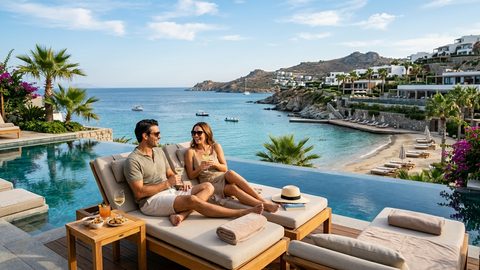 Turkey's Adults-Only Resort Labels and What They Actually Guarantee
Turkey's adults-only resort labels carry no legal weight. Learn how to read the real policy behind the marketing copy before booking in Bodrum or Antalya.
Turkey's Adults-Only Resort Labels and What They Actually Guarantee
Turkey's adults-only resort labels carry no legal weight. Learn how to read the real policy behind the marketing copy before booking in Bodrum or Antalya.
-
 What Adults-Only Actually Means Four Labels That Are Not the Same Thing
Adults-only is not one thing. It means a minimum age, a party rule, a clothing rule, or a marketing promise of quiet. Here is how to tell which one applies before you book.
What Adults-Only Actually Means Four Labels That Are Not the Same Thing
Adults-only is not one thing. It means a minimum age, a party rule, a clothing rule, or a marketing promise of quiet. Here is how to tell which one applies before you book.
-
 Travelling Without Your Children: What Adults-Only Means for Parents
Adults-only is for parents who want a quiet break without any children on site, including their own. Here is how the policy works and why it delivers exactly that.
Travelling Without Your Children: What Adults-Only Means for Parents
Adults-only is for parents who want a quiet break without any children on site, including their own. Here is how the policy works and why it delivers exactly that.
-
 The School Holiday Calendar When Adults-Only Policies Can Change
Some adults-only hotels drop the policy during school holidays, and the detail is often buried in the small print. Here is when and where it happens, and how to check before you book.
The School Holiday Calendar When Adults-Only Policies Can Change
Some adults-only hotels drop the policy during school holidays, and the detail is often buried in the small print. Here is when and where it happens, and how to check before you book.